

Analytical flow-cells PEEK
Analytical flow-cells PEEK allows to use TOY and BABY detectors also for for analytical applications.
| Image | PN | Type | Optical Path Length [mm] | Inside Volume (µl) | Max.flow-rate (ml/min) | Thread UNF | Tube OD | Wetted material | Request quote |
|---|---|---|---|---|---|---|---|---|---|
|
Image

|
PN
12L00002
|
Type
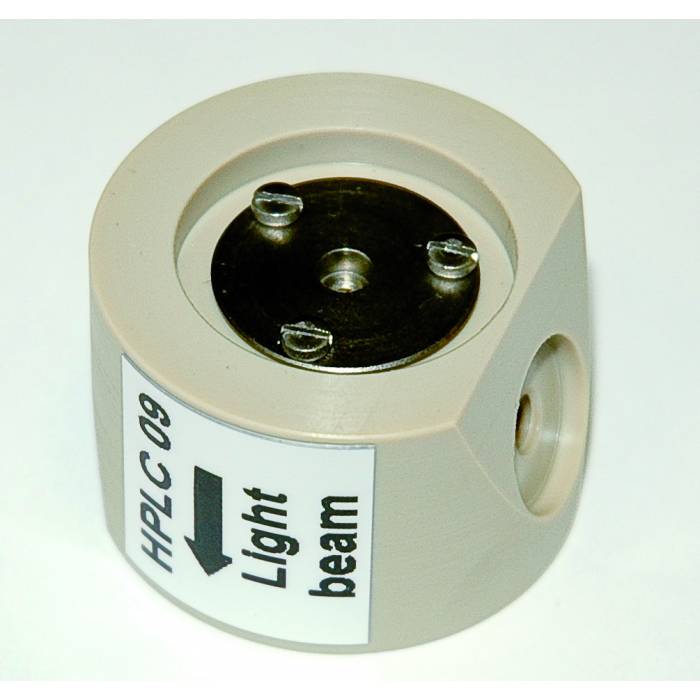
Analytical Cell HPLC 09 PEEK (l=10 mm, 1/16", UNF 10-32)
|
Optical Path Length [mm]
10
|
Inside Volume (µl)
20
|
Max.flow-rate (ml/min)
100
|
Thread UNF
UNF 10-32
|
Tube OD
1/16″
|
Wetted material
PEEK, Quartz glass
|
Actions
|
|
Image

|
PN
12000002
|
Type
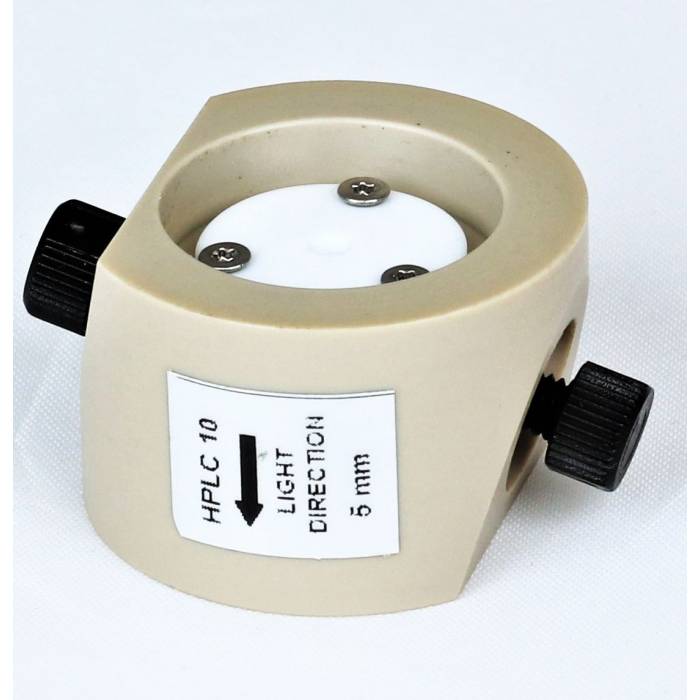
Analytical Cell HPLC 10 PEEK (l=5 mm, 1/16", UNF 10-32)
|
Optical Path Length [mm]
5
|
Inside Volume (µl)
8
|
Max.flow-rate (ml/min)
100
|
Thread UNF
UNF 10-32
|
Tube OD
1/16″
|
Wetted material
PEEK, Quartz glass
|
Actions
|
|
Image

|
PN
12200000
|
Type
Analytical Flowcell HPLC 02 PEEK (l=2mm, 1/16", UNF 10-32
|
Optical Path Length [mm]
2
|
Inside Volume (µl)
2
|
Max.flow-rate (ml/min)
100
|
Thread UNF
UNF 10-32
|
Tube OD
1/16"
|
Wetted material
PEEK, Quartz glass
|
Actions
|
|
Image

|
PN
12300000
|
Type
Analytical Flowcell HPLC 03 PEEK (l=3mm, 1/16", UNF 10-32)
|
Optical Path Length [mm]
3
|
Inside Volume (µl)
3
|
Max.flow-rate (ml/min)
100
|
Thread UNF
UNF 10-32
|
Tube OD
1/16"
|
Wetted material
PEEK, Quartz glass
|
Actions
|
- Description
Analytical PEEK flow-cells have a unique design with an optical length of 2, 3, 5 and 10 mm. Theier desing allows to use them in TOY and BABY detectors for for analytical applications. Cells are connected via tubing with OD 1/16" and thread UNF 10-32 . Internal volume of these cells are 2, 3, 8 and 16 µl. The maximum flow rate is 100 ml/min
These cells are intendthe newed for ECOM OEM detectors TOY18/20DAD I, U; BABY18DAD, and TOY18/20DAD V.
Advantages of the Analytical flow-cells PEEK
• Unique desing which allows to use TOY and BABY detectors also for for analytical applications.
• Extended cell life – thanks to the new cell window design
• Increased temperature resistance range – now from -50 °C up to 100 °C
• More easy exchangeable cells – according to preferred sensitivity/application

ECOM is a global supplier of scientific and laboratory instruments for liquid chromatography. The company was established in October 1991 and it is focused on research, development, and manufacturing of scientific and laboratory equipment for liquid chromatography. Our innovative R&D and dynamic processes allow us to quickly react on customer’s needs and to propose customised products and solutions. ECOM’s focus on high quality products and responsive service supports high performance of its customers.
About Us
